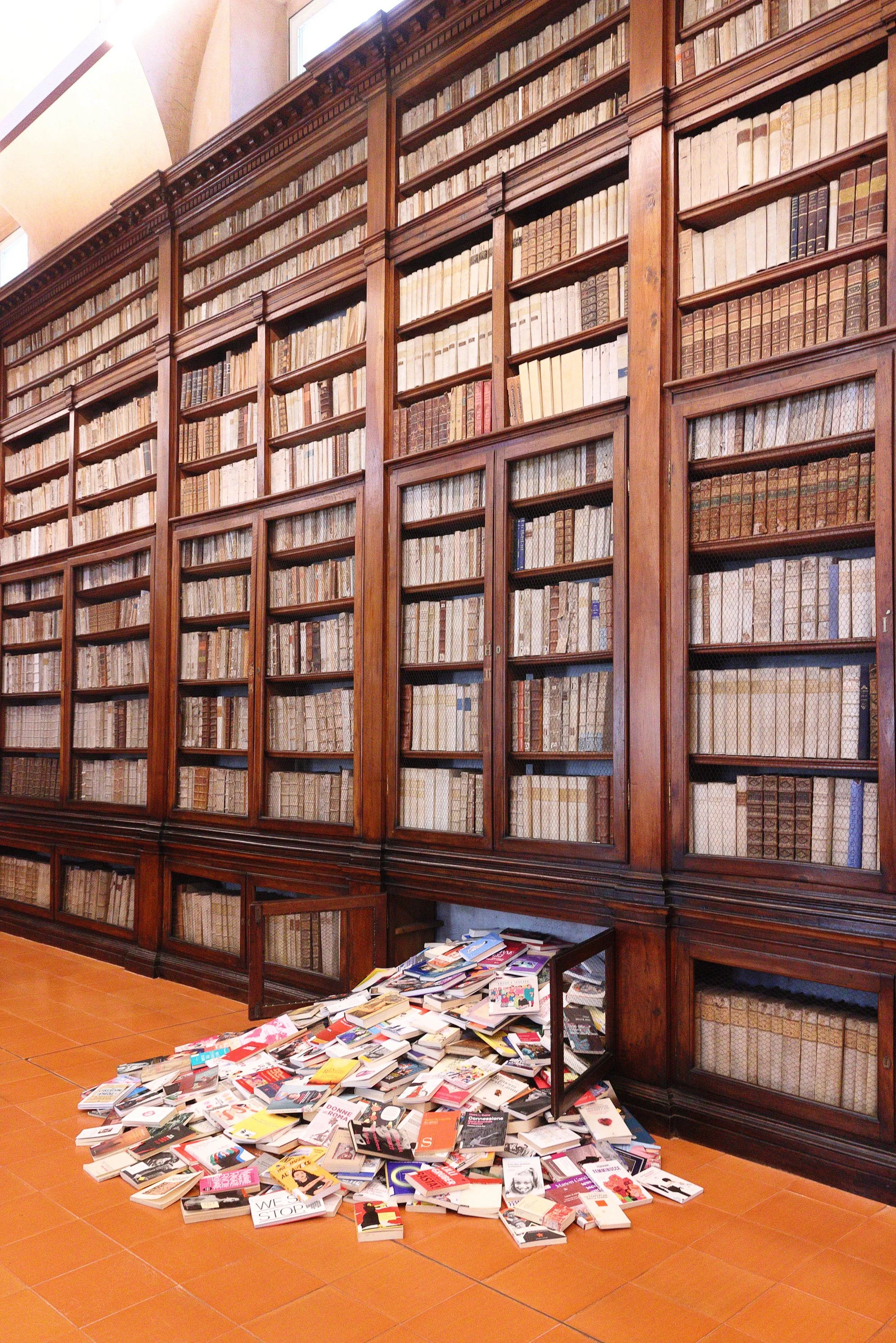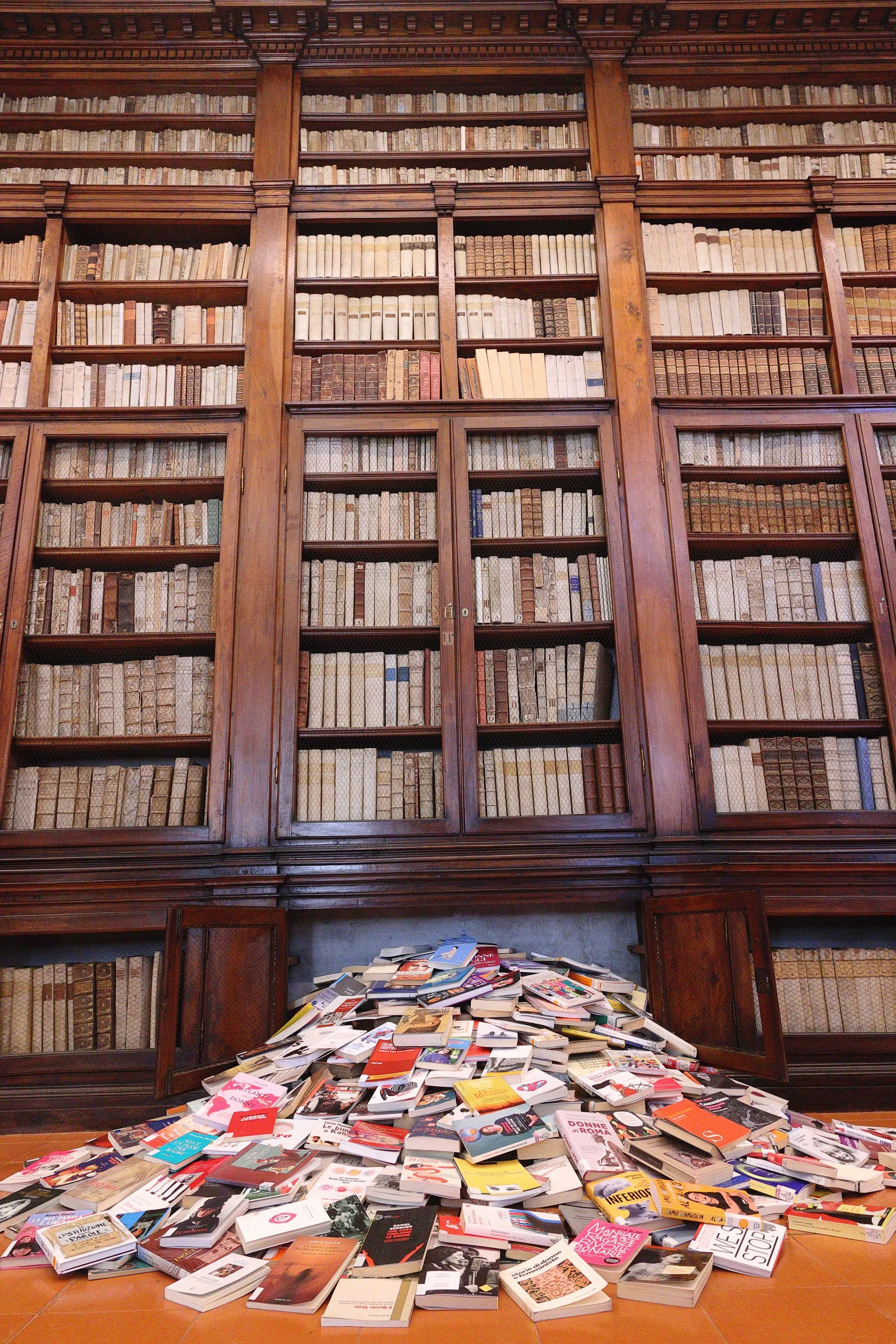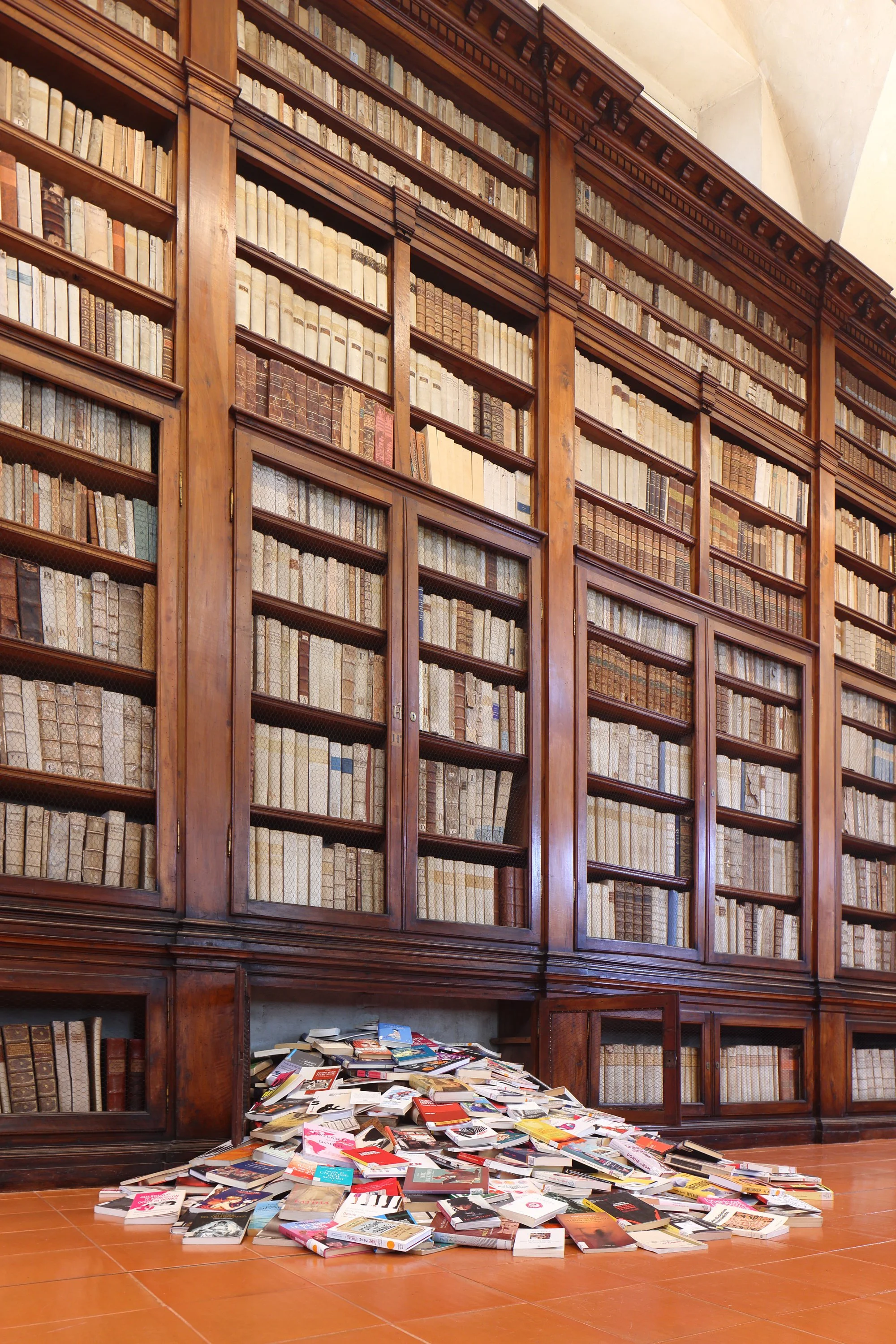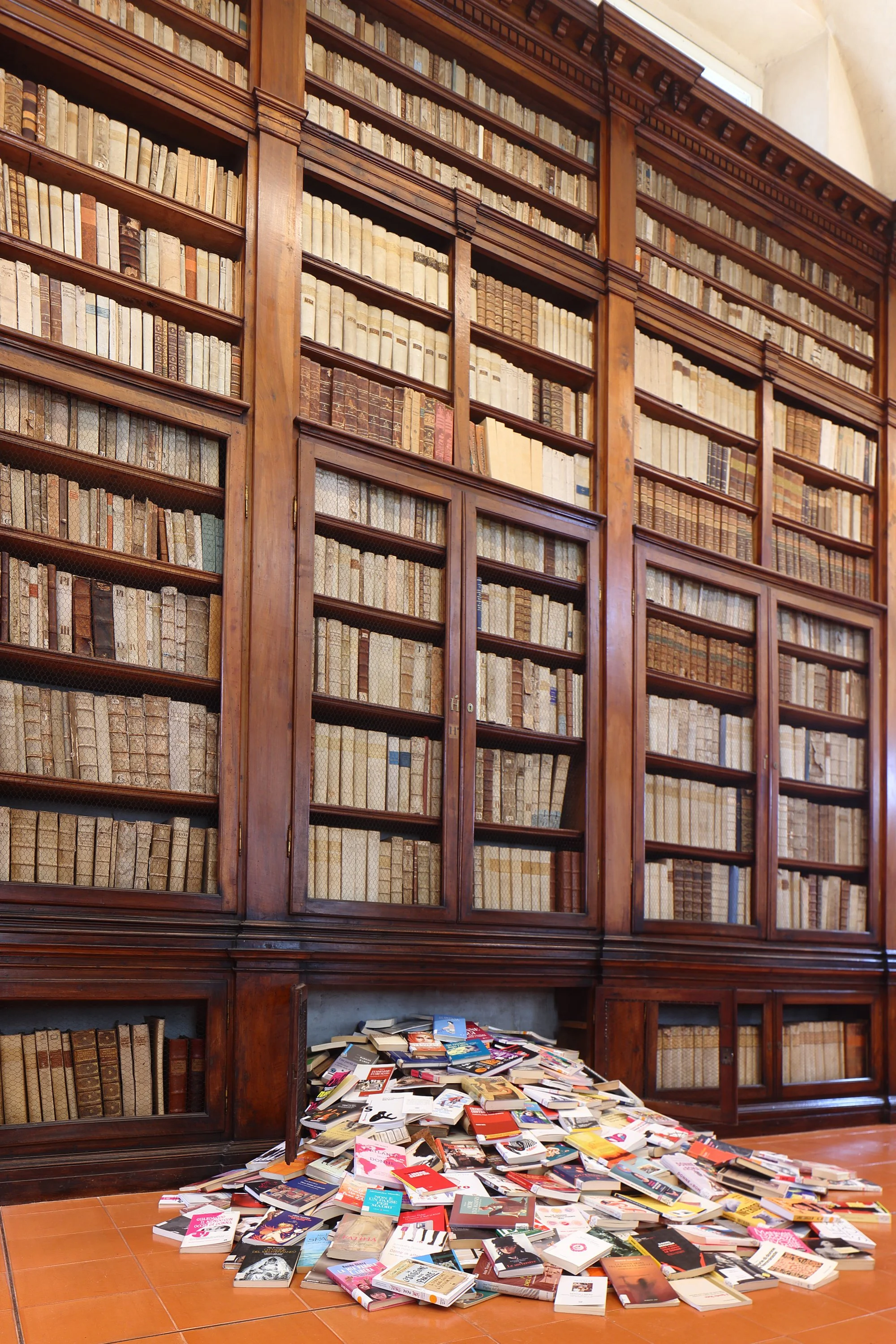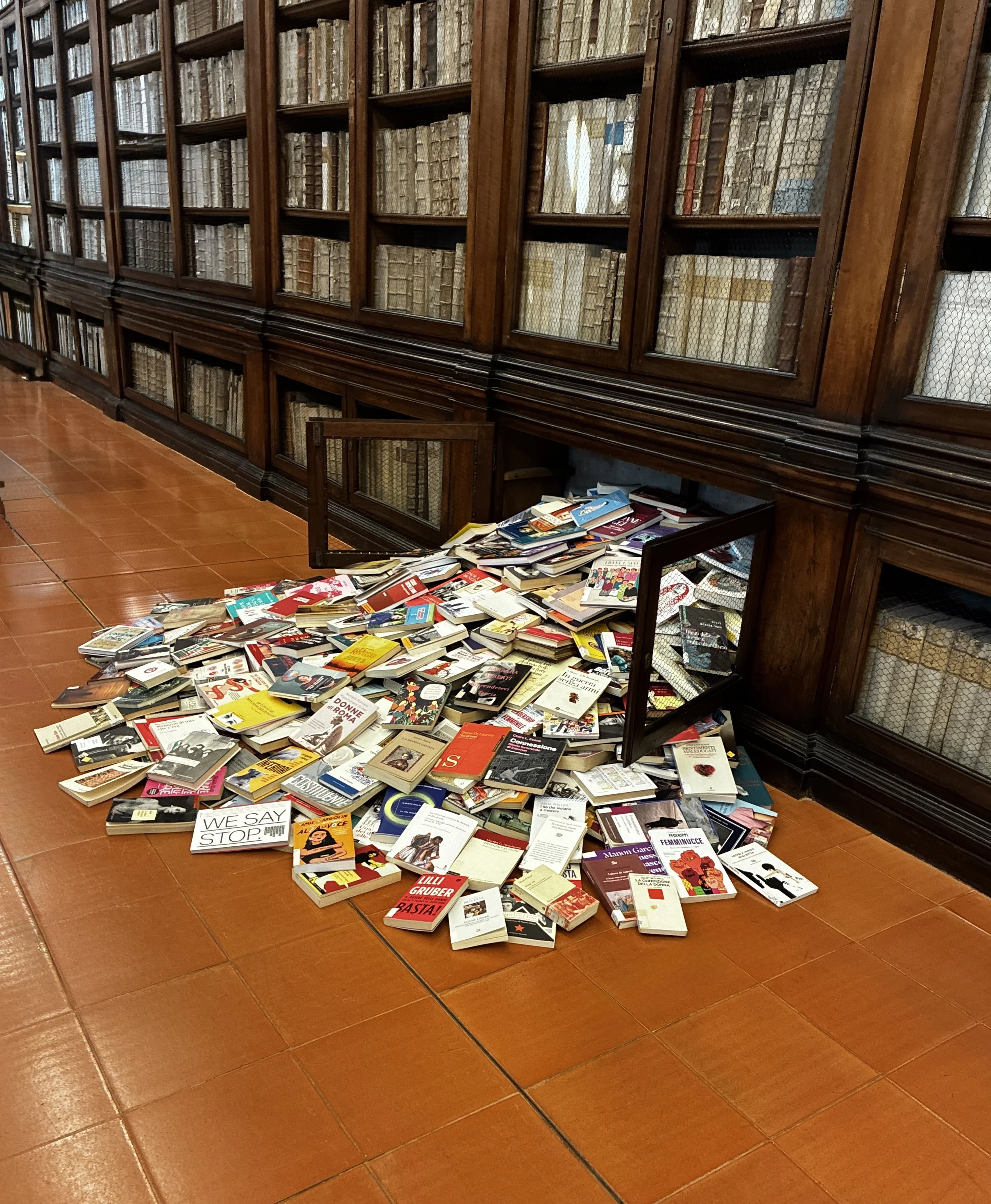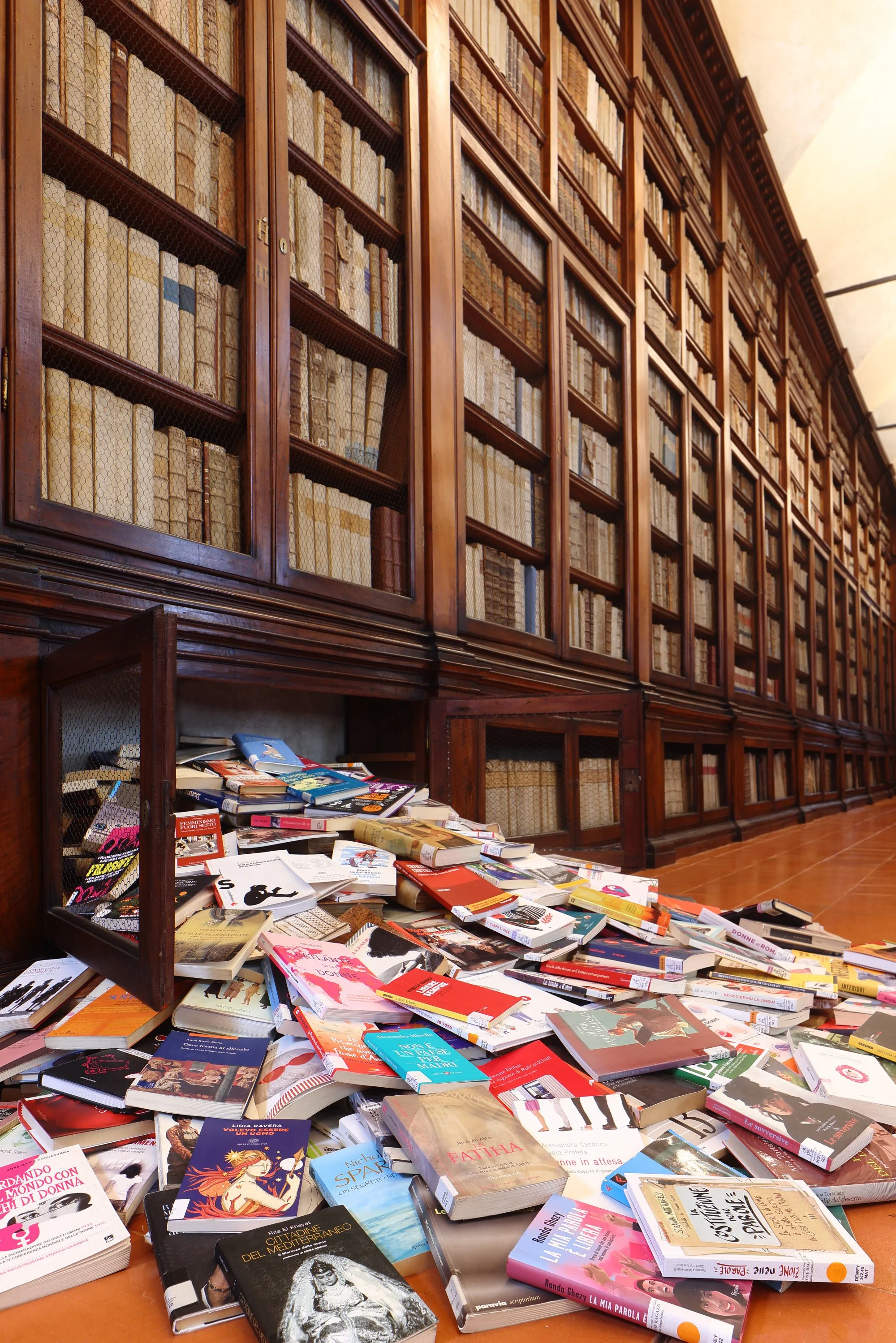
Tante Parole at Passerini Landi Library, Piacenza
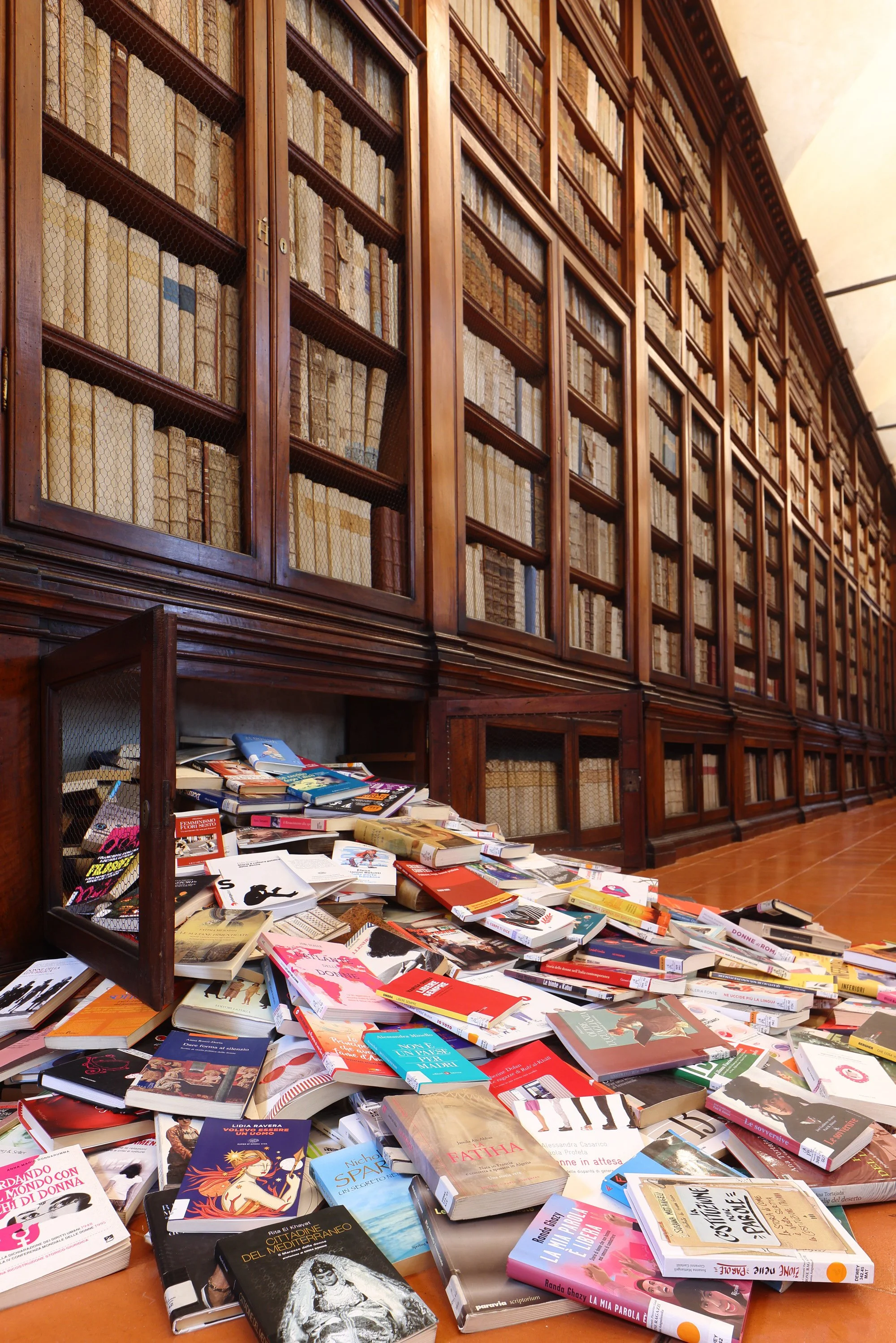
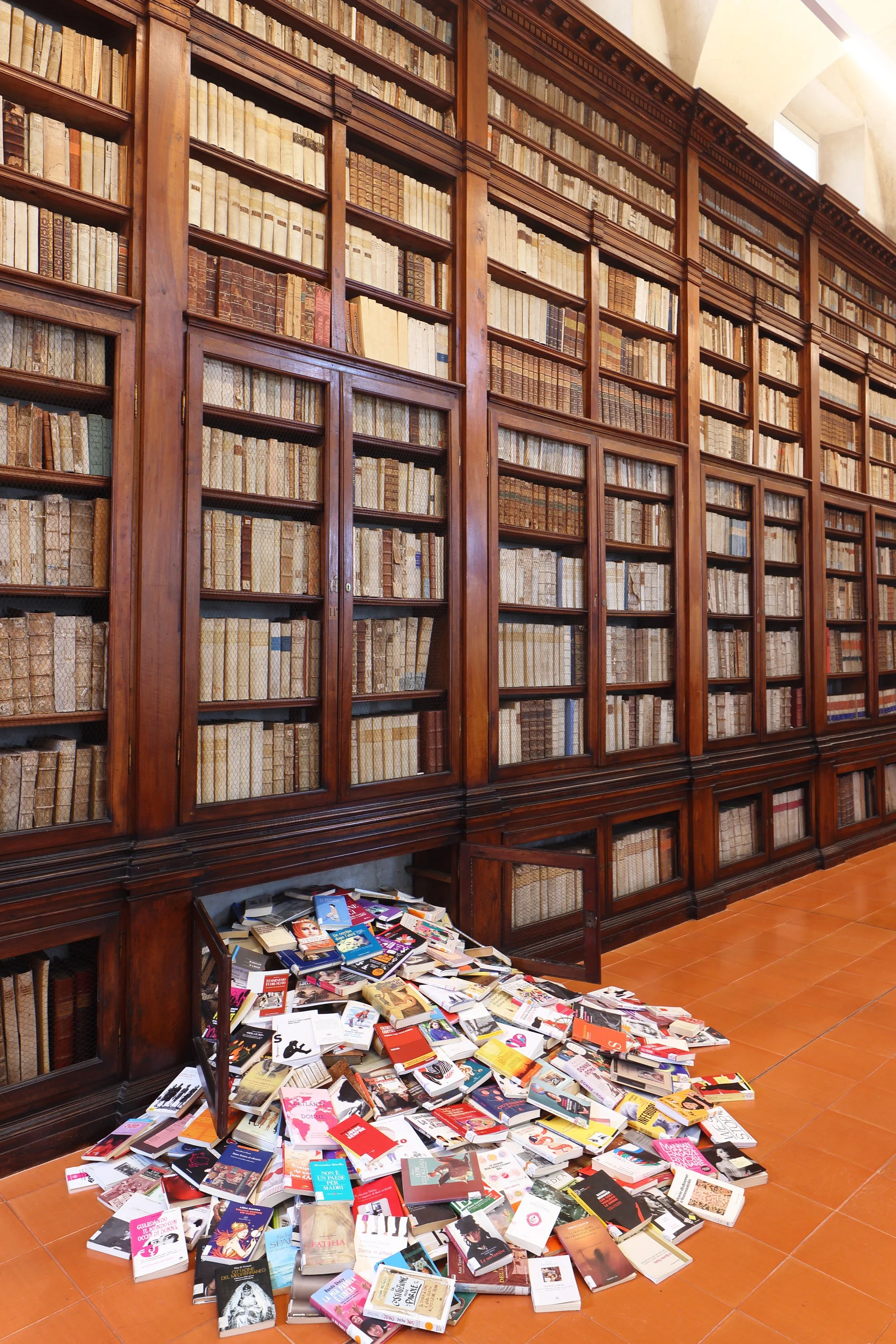
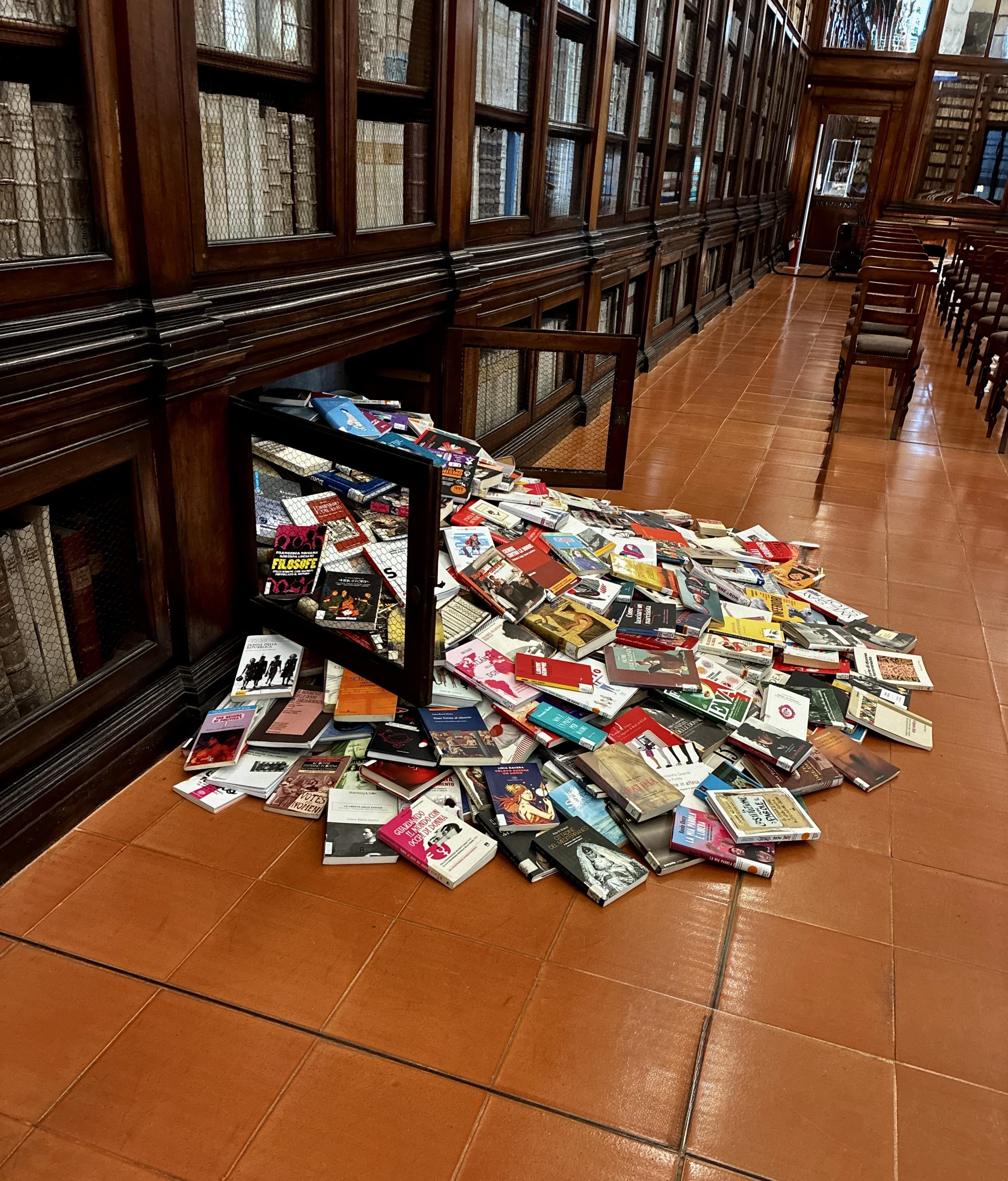
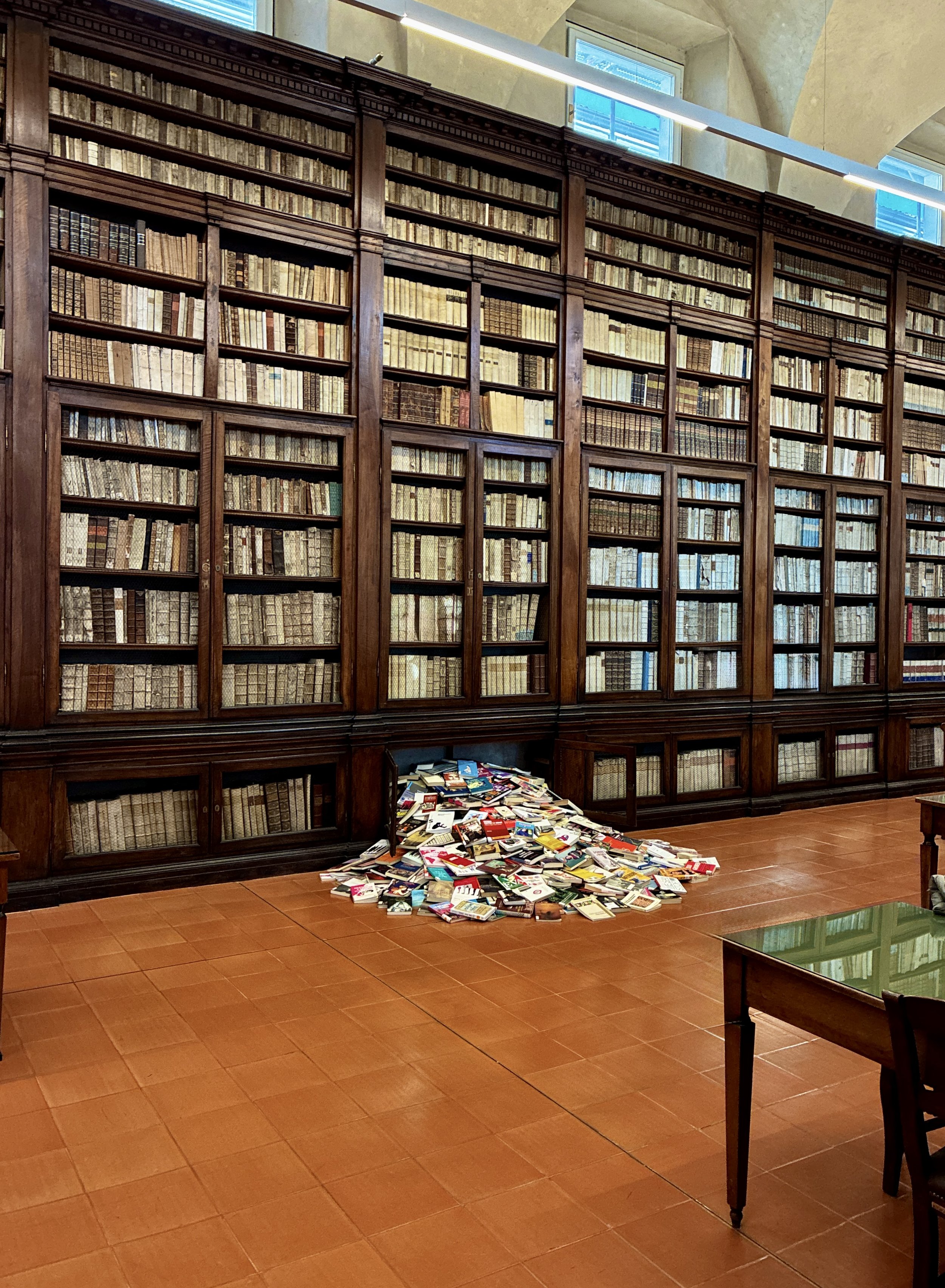
Tante Parole - temporary installation - 2026
photo credit Carlo Pagani, Comune di Piacenza
The installation Tante Parole is presented on the occasion of the symposium organized to celebrate the 80th anniversary of women’s first vote.
Tante Parole was done in collaboration with Cooperativa Archivistica e Bibliotecaria – CAeB. Their contribution has not only been organizational and financial, but also deeply cultural: they carried out valuable research and selection of the titles that make up the installation, contributing substantially to its narrative and conceptual strength.
My work is also supported by the anti-violence center and social cooperative Cerchi d’Acqua in Milan, which has chosen to support the ethos of this installation, recognizing in women’s right to vote not only a political achievement, but a first and fundamental step toward female self-determination.
Tante Parole makes its second appearance in the spaces of the Passerini-Landi Library, an emblematic place of memory, knowledge, and cultural transmission.
This site-responsive temporary installation stems from a simple yet necessary gesture: to gather, bring together, and give form to knowledge that risks dispersal. It thus becomes a living archive of feminist memory.
This site-responsive temporary installation stems from a simple yet necessary gesture: to gather, bring together, and give form to knowledge that risks dispersal. It thus becomes a living archive of feminist memory.
The work stages a contrast between the power and the limits of language, between order, containment, and transformation. The volumes overflow from the walnut doors of the historic bookcase in this room and spill onto the floor. The quantity of words becomes visible: a limited yet impossible-to-ignore presence. The titles present themselves to the viewer, inviting them to read, remember, and revisit the achievements of the feminist movement—past, present, and those still to be realized.
The title holds an intentional ambiguity: on one hand, the power of language as a tool of freedom; on the other, the frustration of the persistent gap between discourse and action.
The words here are not simply “many”: they form a flow that overflows and presses forward, yet is not enough on its own. After decades of studies, manifestos, laws, and reflections, full equality has still not been achieved—and it is up to us to transform these words into shared consciousness and real change.
In this sense, Tante Parole is not only a tribute to the generations that came before us, but also a gesture of continuity and responsibility. It is both a commemorative monument and a reflection on an inheritance that is renewed in the present, making visible a history that asks not only to be remembered, but to be continued.